Dynamic Therapy

Clinical Myofascial Release

Are you dealing with chronic body stiffness, unyielding postural strain, or a feeling of restriction throughout your movements? Our clinical Myotherapists use targeted myofascial release techniques to gently stretch and reset tight connective tissues, helping you move with ease.

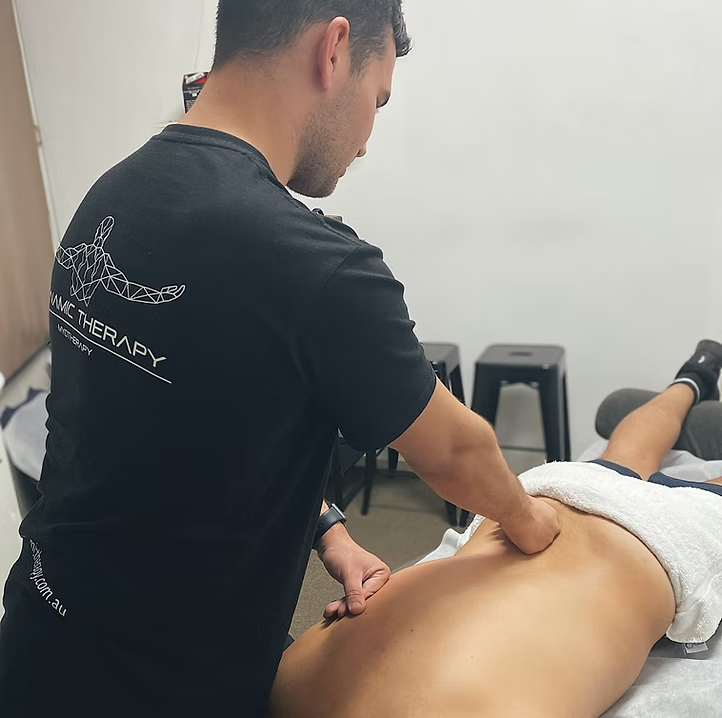
Myofascial release treatment at Dynamic Therapy

Releasing Chronic Connective Tissue Restriction and Postural Strain

Your muscles are wrapped in a continuous, complex web of connective tissue called fascia. In a healthy state, this tissue is pliable and slides easily to support smooth movement. However, factors like physical trauma, repetitive motions, or prolonged sitting can cause the fascia to become dense, tight, and restricted.

Providing targeted myofascial release allows us to focus directly on these deeper connective tissue patterns. Rather than focusing solely on isolated muscle knots, this specialized fascial restriction therapy treats the broader structures that may be binding your posture. By applying sustained, realigning pressure, we work to release deep-seated structural blocks, helping you find lasting relief from long-term stiffness.

The Science and Anatomy of Fascial Systems

Fascia is a highly adaptive, sensitive tissue structure rich in sensory nerves. When subjected to chronic mechanical strain, it undergoes structural remodeling, laying down extra collagen fibers that can limit your mobility and require professional connective tissue release.

Our clinical assessments focus on several key fascial principles:

Fascial Adhesions and Restricted Movement

Inflammation or physical overuse can cause separate layers of fascia to form minor structural adhesions. These sticky spots disrupt the smooth gliding action between your muscles, increasing internal friction and making everyday movements feel heavy, signaling a need for targeted myofascial tension therapy.

Postural Compensation Patterns and Global Tension

Because the fascial system connects your entire body, a restriction in one zone can pull on tissues further down the line. For example, tightness in your plantar fascia or calves can create a steady tug that contributes to chronic tension in your lower back, requiring holistic postural realignment strategies.

Viscoelastic Tissue Transformation

Fascia displays viscoelastic properties, meaning it responds to steady, prolonged force by changing from a thick, gel-like state to a more fluid, flexible consistency. Applying precise viscoelastic tissue manipulation helps lengthen these tight structures safely.

Our Evidence-Based Treatment Process

  1. Step 1: Postural and Fascial Glide Assessment

    We begin by assessing your standing posture and manually testing how your skin and fascial layers glide over underlying muscles to pinpoint the main zones of connective tissue restriction.

  2. Step 2: Applying Sustained Manual Release

    We apply precise, slow, and sustained pressure across the restricted fascial zones. This targeted hands-on approach encourages the tight collagen fibers to gradually soften, elongate, and return to a more flexible state.

  3. Step 3: Functional Integration and Stability Training

    To preserve your improved mobility, we teach you specific, active movements designed to lock in your expanded range of motion and help you build balanced, long-term postural support.

Frequently Asked Questions

How does myofascial release differ from a standard deep tissue massage?

Deep tissue massage uses rhythmic strokes focused directly on individual muscle groups. Myofascial release applies slower, sustained pressure over broader areas to stretch and realign the connective fascial web that covers those muscles.

Why does fascial tightness feel like a broad, dull ache?

Fascia is filled with sensory nerve endings. When it becomes tight or restricted, it often produces a widespread, dull, and aching sensation across a whole region rather than a sharp, pinpointed pain in a single spot.

Can I claim my treatment on my private health insurance?

Yes. We provide on-site HICAPS processing. If your private health insurance cover includes Myotherapy or Remedial Massage, you can claim your rebate immediately at the clinic, leaving only the gap to pay.

I always felt tight and restricted across my lower back and hips. These myofascial treatments helped release that constant tension, and I can move much more freely now.
Kevin D., Patient Review
Book Clinical Assessment

Local Resident: Serving communities across Deer Park, Caroline Springs, St Albans, Cairnlea, and Sunshine West.

Clinical Review Sign-Off

Medically reviewed by Jean-Daniel Finta

Advanced Diploma of Myotherapy | Registered Member, Myotherapy Association Australia (MAA)